Mat Pilates: What It Is and Why It Works
No reformer, no membership, no studio. What the method actually is, the six principles behind it, and where it beats the machine.
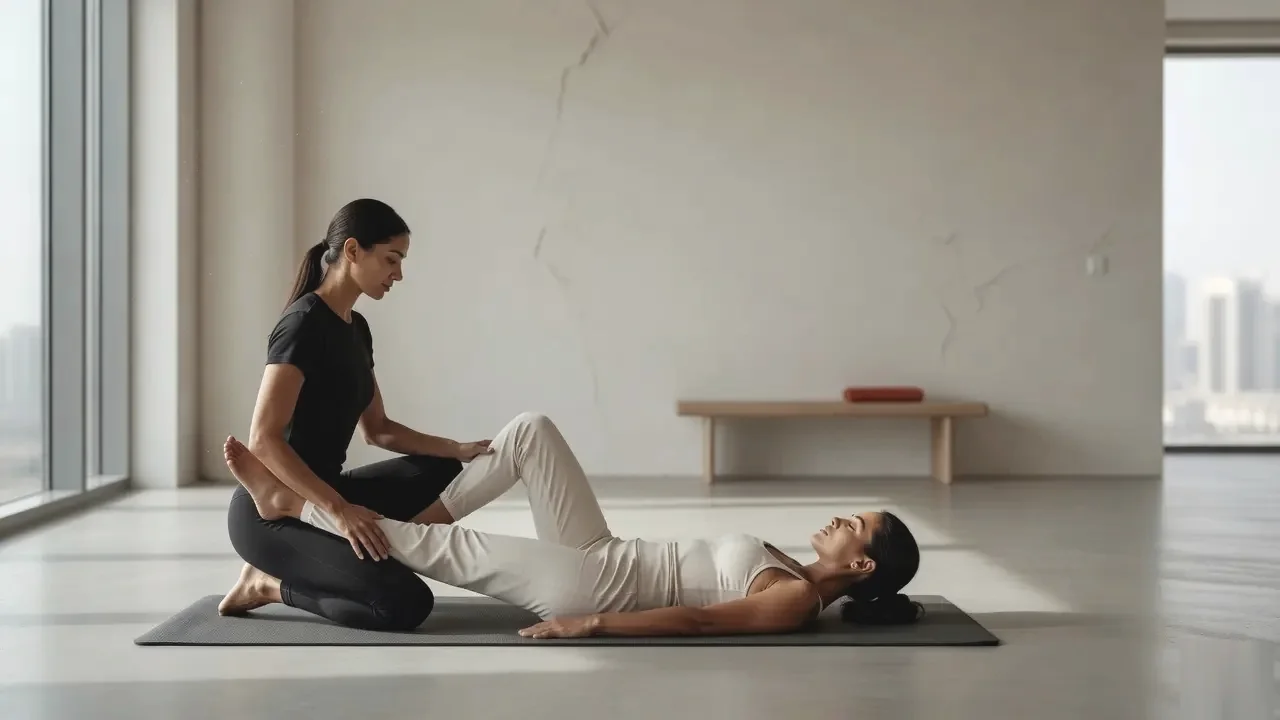
You do not need expensive equipment, a gym membership, or even a lot of space to build a stronger, more flexible body. All you need is a mat and the right knowledge. That is exactly where mat pilates comes in.
Mat pilates is one of the most accessible and effective forms of exercise available today, and it has helped millions of people improve their core strength, posture, and overall body awareness. Whether you are completely new to fitness or simply looking for a low-impact workout that delivers real results, this practice offers something genuinely valuable for every body type and fitness level.
In this tutorial, you will learn exactly what mat pilates is, how it differs from other forms of exercise, and why it has stood the test of time since Joseph Pilates first developed his method nearly a century ago. You will also discover the key principles that make it work and what you can realistically expect as a beginner. By the end, you will have a clear, confident understanding of how to get started on the right foot.
What Mat Pilates Actually Is
Mat Pilates is a low-impact discipline built on slow, controlled movements performed on a mat, using nothing more than your own bodyweight and a flat surface. Developed by Joseph Pilates in the early 20th century, originally as a recovery method for injured dancers and athletes, it has evolved into one of the most clinically respected forms of body conditioning available. The Cleveland Clinic classifies Pilates as a form of strength training that focuses on improving muscle tone, building greater stability and endurance, and cultivating what practitioners describe as a longer, leaner physical presence. Critically, it achieves all of this without loading the joints, making it as relevant to someone recovering from a desk-bound workweek as it is to a seasoned athlete.
What separates mat Pilates from a generic floor workout is not the location or the absence of equipment. It is the methodology. A standard ab circuit asks you to repeat movements until fatigue; mat Pilates asks you to perform fewer movements with absolute precision, coordinated breathing, and conscious muscular engagement throughout. The method carries a defined movement vocabulary, specific anatomical cues, and a logical progression from foundational exercises to advanced sequences. Dubai-based Balanced Body-certified instructor Paula Uribe notes that mat Pilates demands more control, precision, and full-body awareness than many equipment-based formats, and is one of the most challenging forms of training when executed properly, a fact that consistently surprises beginners who assume that no equipment means less work.
The method is governed by six principles that Joseph Pilates established as the operational core of every session. Concentration means directing deliberate mental attention to each movement rather than going through the motions. Control means no muscle engages or releases by accident. Centering draws every movement from the deep abdominal and low-back muscles, the region Pilates called the powerhouse. Precision means correct form takes priority over repetition count, always. Breath provides the timing structure; the pattern of inhale-to-prepare and exhale-to-execute is not optional decoration but a physiological tool that activates the deep core. Flow connects individual exercises into continuous, unbroken sequences rather than isolated static holds. In a real session, you experience all six simultaneously: a coach cues you to scoop your navel (centering), inhale (breath), extend with control (precision and control), and move without pausing between repetitions (flow), all while staying mentally present (concentration).
The UAE context makes this moment particularly significant. Pilates is cited as one of the top fitness resolutions heading into 2026, and Gulf News confirmed it as one of the UAE's biggest fitness trends of the year, with studios continuing to open across Dubai, Abu Dhabi, and Ras Al Khaimah. Major gym chains have added mat Pilates as a dedicated, timetabled class format alongside reformer sessions, reflecting genuine mainstream demand rather than niche interest. The timing is driven partly by a very practical constraint: two years of reformer Pilates popularity have filled Dubai's specialist studios to capacity, creating waitlists and inflexible booking windows. Mat Pilates requires no reformer machine, no booking system, and no commute to a specific facility. That accessibility is exactly why it has moved from boutique schedule filler to a primary format in its own right, and why it translates so naturally to a home or building gym environment.
Mat Pilates vs. Reformer Pilates: What Actually Changes
The reformer machine is a purpose-built piece of equipment consisting of a sliding carriage, a foot bar, adjustable springs, and attached straps. The springs are the defining feature: depending on how they are configured, they can either assist a movement by reducing the load the body must manage, or intensify it by adding resistance against the carriage's travel. This makes the reformer a genuinely versatile rehabilitation and training tool, particularly useful for clients returning from injury who need a guided, semi-constrained range of motion while their tissues heal. The machine also provides continuous proprioceptive feedback through the carriage's movement, a quality of sensory input that bodyweight exercise simply cannot replicate. With over 100 exercise variations possible on the reformer compared to approximately 50 core mat exercises, it offers significant programmatic breadth. That breadth, however, comes at a structural cost.
Without the carriage beneath you and the springs mediating the load, the body is entirely responsible for generating its own stability. Every rep, every transition, every held position on the mat must be managed through active muscular control, with no mechanical assist available. Research published in peer-reviewed sources indicates that mat Pilates places a higher demand on the deep core musculature, specifically the transverse abdominis, precisely because the machine is not present to share the stabilisation load. This is not a limitation of mat work; it is its mechanism. The comparison between mat and reformer Pilates reveals that both modalities develop real strength, but they develop it through different demands. Mat Pilates builds the foundational layer of functional strength that underpins almost every other form of physical activity.
The access gap matters, particularly in Dubai. Reformer studios operate with class sizes capped by machine availability, typically between five and twelve participants per session. Equipment costs exceed $5,000 per machine, and studios pass that overhead directly into class pricing, which runs from $30 to $60 or more per session internationally, with Dubai's premium real estate environment pushing costs higher still. Booking windows are tight and filling quickly as demand continues to grow faster than new capacity can open. Mat Pilates, by contrast, requires three things: a qualified coach, a mat, and floor space. That simplicity is what makes it compatible with a mobile training model, delivered in a living room, a building gym, or an outdoor terrace without any logistical overhead whatsoever.
The most important point to address directly is the assumption that mat Pilates is somehow a compromise when a reformer is unavailable. It is not. A 2021 randomised controlled trial comparing mat and apparatus Pilates found both modalities produced equivalent and significant improvements across strength, aerobic endurance, flexibility, and agility over eight weeks, with no statistically significant difference between groups. Coached mat Pilates has its own progression logic, its own sequence of difficulty, and its own measurable outcomes. Research consistently shows that supervised training produces 28% greater strength gains than unsupervised training regardless of format (Ratamess et al., International Journal of Exercise Science, 2022). The format matters far less than whether a qualified coach is present to correct technique, adjust loading, and maintain progressive challenge.
The practical decision between the two comes down to individual circumstance rather than hierarchy. Reformer Pilates suits those recovering from injury who benefit from spring-assisted range of motion, or anyone who specifically wants tactile feedback through the carriage as a learning tool. Mat Pilates suits those building foundational strength from scratch, training at home, or working one-to-one with a coach in a flexible location. For a busy professional in Dubai who values their time and wants consistent, coached sessions without commute, booking friction, or schedule dependency, mat Pilates is not the second option. It is frequently the smarter one.
What a Coached Mat Pilates Session Actually Includes
Before a single exercise is programmed, a qualified coach conducts a structured assessment. This means evaluating your posture, identifying asymmetries, testing how you move through basic patterns, and noting any existing restrictions, previous injuries, or areas of pain. The CIMSPA Professional Standard for Pilates Based Matwork Instructors formally recognises pre-exercise screening as a core competency, not an optional extra. A coach managing a room of twenty people in a group class cannot replicate this. They see bodies in motion but rarely see your body in detail. A 1:1 assessment changes the entire foundation of what follows, because every exercise selection, every load, and every progression point is built on what was actually found, not on a generic template.
Session Structure: From First Breath to Final Stretch
A coached mat Pilates session follows a deliberate four-part structure. It opens with a breath and activation warm-up, where the coach establishes diaphragmatic breathing mechanics and begins waking up the neuromuscular pathways before any load is introduced. This phase matters more than most beginners expect; controlled breathing is not decorative, it is the primary mechanism for activating the deep stabiliser system that the rest of the session depends on.
The core sequencing block comes next. This is where the work targets the deep stabilisers: the transverse abdominis, which wraps around the spine and pelvis like an internal corset; the multifidus, which runs along the vertebrae and provides segmental spinal support; and the pelvic floor, which works in coordination with both. Research cited by Pilates Anytime notes that the mat system, when applied correctly, produces measurable improvements in strength, mobility, circulation, and body awareness. A coach ensures this block is targeted rather than accidental.
The third phase builds into a movement flow section. Exercises become more complex and more demanding, layering coordination and control on top of the stability established earlier. The session closes with a cool-down incorporating mobility work, returning the body to a settled state and addressing any areas of tightness that surfaced during the session.
Real-Time Cueing: Why It Changes Everything
Effective cueing in Pilates is the difference between doing an exercise and actually training the intended muscle group. A coach is not exercising alongside you; they are watching you. When your hip hikes during a leg lower, or you hold your breath during a challenging hold, the coach corrects it immediately, before that error becomes a habitual compensation pattern. According to the British Journal of Sports Medicine (2021), supervised exercise reduces injury risk by up to 50%. Cueing is the mechanism behind that figure. In a group class, instructors often cannot assess individual misalignment in real time, particularly when managing a full room. One-to-one instruction removes that constraint entirely.
Progression That Reflects Where You Actually Are
A coached program is not static. Session by session, the coach introduces new movement challenges as your strength, control, and body awareness develop. The CIMSPA standard explicitly places responsibility on the instructor to support individual progression and adapt accordingly. Benjamin Degenhardt, founder of 360° Pilates, notes that the mat sequence is one of the hardest pieces in the Pilates system to master, requiring high levels of coordination and control. That mastery is earned incrementally, and a qualified coach knows when you are ready to advance and when consolidating a pattern is the smarter choice. A group class has no mechanism for this; the format is fixed regardless of where any individual sits in their development.
Nutrition Integration: The Missing Layer
The final dimension that separates a coached session from a class experience is nutritional alignment. A coach who is also a certified nutrition professional can connect what you are doing in the session with what you are eating and how you are recovering. Protein availability affects muscular repair. Energy intake affects output quality. Recovery nutrition affects whether Tuesday's session feels manageable or exhausting. At SHUYO, Abdul Wahid holds dual qualifications in both personal training and nutrition coaching, which means the program accounts for all of these variables in a single relationship. No studio class offers that. The session and the diet are designed together, ensuring that every element of your routine is working toward the same outcome.
Who Mat Pilates Is For (and Who Gets the Most From It)
Pilates coverage in UAE media, including Gulf News, has largely centered on women, and that focus is understandable given the method's mainstream adoption among female fitness participants across Dubai and the wider Gulf. But framing mat Pilates as a women's discipline is both inaccurate and limiting. The six foundational principles, breathing, concentration, control, centering, precision, and flow, are physiologically neutral. The benefits they produce, spinal stabilisation, postural correction, injury prevention, and deep muscular endurance, are relevant to any body that moves, sits for long hours, competes in sport, or simply wants to stay functional for decades. The profiles below cover who genuinely benefits most.
The Desk Worker
If you spend six or more hours a day at a screen, your body is adapting to that position whether you notice it or not. Prolonged sitting shortens the hip flexors, progressively weakens the posterior chain, and concentrates compressive load on the lumbar spine. Over months and years, this manifests as chronic lower back tension, reduced thoracic mobility, and the rounded shoulder posture that is now near-universal in professional environments. A September 2025 peer-reviewed study published in BMC Sports Science, Medicine and Rehabilitation examined the effects of Pilates directly on office workers, anchoring its rationale in the increasing prevalence of sedentary work, and found meaningful improvements in postural alignment. Mat Pilates addresses this profile precisely because its foundational exercises target the deep stabilisers of the spine and pelvis, the muscles that prolonged sitting systematically switches off.
The Executive or High-Performer
Mat Pilates demands something that most high-performers rarely practise: full mental presence during physical movement. Each exercise requires you to coordinate breath, stabilisation, and precise movement simultaneously. There is no passive repetition and no checking your phone between sets. Research on posture improvement links better spinal alignment to reductions in cortisol and improvements in hormonal markers associated with confidence and composure, a biological case that the corporate athlete framing makes directly. Beyond the physiological argument, mat Pilates functions as a structured active recovery modality on days between heavier training. For someone who lifts three times a week or runs regularly, a coached mat session on an alternate day maintains movement quality, reduces accumulated tension, and builds the breathing mechanics that heavier work tends to bypass entirely.
The Returning-to-Exercise Profile
For anyone re-entering training after a period of inactivity, a post-partum recovery, or a previous injury, the question is not which workout is most effective. The question is which workout is safe to start with. Mat Pilates answers that question clearly. It is low-impact, requires no loaded equipment, and progresses through movement quality rather than increasing load. A qualified coach can modify every exercise to match current capacity and advance programming as strength and stability improve. The supervised nature of private coaching also reduces injury risk by up to 50 percent, according to the British Journal of Sports Medicine (2021), which is a meaningful advantage when the body is at its most vulnerable.
The Athlete or Strength Trainer
Competitive and recreational athletes who already lift, run, or train a sport regularly tend to develop the same structural gaps regardless of their fitness level: underdeveloped rotary stability and shallow, inefficient breathing mechanics. Both limit performance directly. Rotary stability controls how force transfers through the body during throwing, cutting, or compound lifts. Breathing mechanics determine how effectively the diaphragm stabilises the core under load. Mat Pilates trains both, through exercises that demand lateral and rotational control while maintaining rhythmic diaphragmatic breathing throughout. For this profile, Pilates is not a replacement for primary training. It is the gap-filler that makes primary training safer, more efficient, and more sustainable over the long term.
Why Mat Pilates Fits the Dubai Lifestyle Better Than Most Formats
Dubai is a city of extreme ambition and extreme climate. That combination creates a specific fitness problem that most training formats are not designed to solve. Understanding why mat Pilates works here requires looking honestly at three structural barriers that cause otherwise motivated people to stop exercising entirely.
The Three Friction Points That Break Most Routines
The first is heat. From May through August, outdoor temperatures in Dubai regularly exceed 40 degrees Celsius, with humidity levels that make sustained physical effort genuinely unsafe. This compresses the effective outdoor training year to approximately seven months, which means any program built around running routes, outdoor boot camps, or exposed gym facilities has a built-in four-month disruption cycle baked into it before a single session is missed.
The second is Ramadan. According to the GymNation 2026 Health and Fitness Report, drawn from 15,322 respondents and over 745,000 data points, 71% of UAE residents reduce their exercise during Ramadan. Fasting alters energy availability, sleep patterns, and daily scheduling in ways that make fixed-time studio classes difficult to maintain. A format that can be moved to early morning before Suhoor, or to the evening after Iftar, without requiring a booking change or a commute, removes this barrier almost entirely.
The third is logistics. Members who lapse from gym memberships in Dubai rarely cite loss of motivation as the cause. They cite schedule disruption: a project deadline, a change in work hours, a school term starting, a meeting running late. The commute to a fixed studio location is not a neutral act; it is a decision point that occurs every single session, and every session it can be lost.
How Mat Pilates Eliminates Each One
Mat Pilates requires no outdoor exposure, no equipment, no machine booking, and no commute. A full session needs nothing beyond a mat and a clear floor space. That means a session can take place in a living room in Business Bay, a building gym in Dubai Hills, a spare room in Emirates Hills, or any quiet outdoor space during the seven months when conditions allow. No other fitness format matches that combination of simplicity and portability.
This is not a minor convenience feature. It is the structural reason mat Pilates produces more consistent attendance than almost any other modality available to Dubai residents.
Why Supervision Converts Format Into Results
Format solves the access problem. Supervision solves the adherence problem. Research consistently shows that unsupervised exercise produces adherence rates of 40 to 50%, while working with a personal trainer raises that figure to 80 to 90% (ACSM, 2021). Studies on exercise adherence among novice gym members confirm that fitness club attendance rates in the first months of membership can fall as low as 10 to 37%, even among people who paid to join. Access without accountability produces poor outcomes.
When a coach comes to the client, the session happens regardless of traffic, studio cancellations, or gym queues. Personal training clients average 2.5 times more sessions per month than solo gym members, per the Journal of Strength and Conditioning Research (2019). That frequency difference is not explained by motivation. It is explained by friction removal.
Three coach-led mat sessions per week, delivered to your door, create a predictable weekly structure that does not depend on weather windows, studio availability, or willpower reserves. The 94% of UAE residents who aspire to better health are not lacking desire. They are losing sessions to logistics. A format that travels with the coach, and lands wherever the client already is, is the closest thing to a logistics-proof fitness system available in this city. That is the SHUYO model in practice: not a harder push toward consistency, but a structure designed so that consistency stops requiring a decision every single week.
The Cost Equation: What You Are Actually Paying For
Start with the sticker price. A gym membership in Dubai costs between AED 300 and 600 per month, which sounds reasonable until you account for what actually happens after you sign the contract. According to a RunRepeat analysis spanning 114 countries, 67% of gym memberships go completely unused. The member pays for access. The access goes untouched. Month after month, the direct debit clears and the floor stays unvisited. The real cost of a gym membership is not the monthly fee; it is the monthly fee divided by the number of sessions you actually complete. For the majority of members, that effective cost per session is not low. It is infinite.
The Result Per Dirham Is the Only Number That Matters
A personal training session in the UAE costs between AED 200 and 500. On a line-item basis, that is more expensive than a gym membership. The comparison, however, is not between a session and a membership. It is between a result and an absence of one. Supervised training produces 44% more fat loss over 12 weeks compared to unsupervised exercise, according to research published in the Journal of Sports Medicine. The question a first-time buyer should be asking is not whether a coach costs more. The question is what each dirham actually returns in measurable physical progress.
Adherence Is Where the Real Maths Lives
The data on adherence makes the cost argument even more direct. Unsupervised gym attendance produces adherence rates of 40 to 50%, per the American College of Sports Medicine. A supervised program produces adherence rates of 80 to 90%. Run those numbers against a monthly fee and the picture changes entirely. If you attend half your planned sessions without a coach and nearly all of them with one, the effective cost per completed session with a coach is materially lower, before you account for the fact that the sessions themselves produce superior results. Consistency is not a personality trait. It is a product of structure, and structure is what coaching delivers.
The Reformer Class Comparison
Reformer studios across Dubai typically charge between AED 120 and 250 per group class. That price point purchases equipment access and a general class format. It does not include an individual movement assessment, a personalized program built around your asymmetries and goals, or a coach whose attention is on you specifically rather than a room of twelve. The Pilates studio market has grown precisely because the format is popular, not because group studio classes are the highest-return vehicle for individual progress. A private coached mat session costs no specialist equipment and delivers what a reformer group class structurally cannot: individual assessment, progressive programming, and corrective instruction applied to your body.
The goal of fitness spending is not to minimize outlay. It is to produce the best measurable result from the time and money committed. On that measure, the data on supervised versus unsupervised training consistently points in one direction. Coached, accountable training is the higher-return option. Every other variable is secondary.
How to Start Mat Pilates: A Practical First-Session Guide
Before You Begin: What to Bring and Prepare
Preparation before your first session is straightforward, but the details matter. You need a non-slip mat with a thickness of 5 to 6mm, which is the practitioner standard for mat Pilates. This thickness provides enough cushioning for spinal movements like pelvic curls and bridge work without compromising the stability you need for balance-dependent exercises. A standard yoga mat is typically 3mm and will feel inadequate within the first ten minutes. Wear close-fitting clothing, not loose or baggy layers, because your coach needs a clear line of sight to your spine, pelvis, and limbs throughout every movement. Alignment errors are often invisible under oversized clothing, and catching them early is precisely what separates coached training from self-directed practice. Bring water and, if working with a private coach, come prepared to share a brief movement history before you begin. A few minutes covering previous injuries, desk-bound hours, recurring discomfort, or recent activity levels gives the coach the context needed to modify intelligently from the first repetition rather than discovering problems mid-session.
What Actually Happens in the First Session
A well-structured first session does not start with exercise. It starts with a brief postural and mobility screen, where the coach observes how you stand, how your pelvis sits, and where your natural compensations live. From there, the session introduces two foundational concepts that underpin every mat Pilates movement: Pilates breathing and neutral spine. Pilates breathing directs the breath laterally into the ribcage, expanding the ribs outward rather than pushing the belly forward, which allows the deep abdominals to remain engaged throughout. Neutral spine refers to the natural, unstressed curvature of the lumbar spine, neither flattened into the mat nor exaggerated into an arch. Once these two references are established, your coach will guide you through four to six foundational movements. Expect the pelvic curl, the single-leg stretch, the spine twist, and plank variations, each delivered with specific coaching cues about where to breathe, where to stabilise, and which muscles should be initiating the movement.
Why the First Session Will Feel Harder Than You Expect
Most first-time clients are surprised by the mental demand. Mat Pilates operates at a slow tempo by design, and that deliberate pace requires sustained concentration on position, breath timing, and muscle recruitment simultaneously. There is no cardiovascular output to signal effort, and no fatigue that arrives through speed or load. The absence of breathlessness is not a sign that the session is easy; it is a sign that the correct muscles are working rather than larger, dominant muscle groups compensating for weakness elsewhere. That distinction is fundamental to the method, and understanding it early stops clients from underestimating what is happening.
How Your First Month Progresses
Sessions in weeks one and two focus on building movement vocabulary and identifying compensation patterns. Your coach is watching how your body responds under load, noting which side initiates differently, where your range of motion drops, and which cues produce genuine change. Weeks three and four introduce loading progressions and more complex sequencing, building on the patterns already established. By the time most clients reach session eight, they report something that cannot be measured in the session itself: improved posture awareness and the ability to activate the core outside of training, during long meetings, on the drive home, or while standing in a queue.
Class or Private Coach: The Honest Distinction
A group class suits someone who already understands Pilates cues, knows their own compensations, and wants a social or high-volume format. For everyone else, and that includes the majority of beginners, a private coach is the more effective starting point. When you are new to the method, managing a restriction, or returning after time away, a program needs to adapt to you in real time. A coach observes your movement in the first half of a session and uses what they see to select exercises specifically for you in the second half. That dynamic is not available in a class format. If you are based in Dubai and want to start mat Pilates with coaching that comes to you, the SHUYO trial assessment is a free 60-minute session designed exactly for this starting point. Reach out via hello@shuyo.ae or WhatsApp on +971 56 548 8814 to book yours.
Start Where You Are, Build What Lasts
Mat Pilates is not a simplified version of reformer training, and it is not a warm-up for something more serious. It is the original method, the complete method, and for most people beginning their movement practice, it is the most effective place to start. The bodyweight demand it places on your stabilising muscles builds the kind of deep, intrinsic control that makes every other physical activity safer and more effective. That foundation does not come from a machine. It comes from learning to move your own body with precision, under qualified guidance, consistently over time.
Consistency is exactly where most Dubai residents stall. The 2026 data is clear: 94% of UAE residents aspire to better health, yet only 65% report actual year-on-year improvement. That 29-percentage-point gap is not a knowledge gap or a motivation gap. It is a friction gap. Commutes, studio bookings, reformer wait lists and scheduling conflicts are the real barriers. A coached mat session delivered to your home eliminates every one of them. The mat needs nothing except floor space and a qualified coach standing in front of you.
Two actions will move you from aspiration to practice. First, open your calendar and find one recurring three-hour window each week. Three sessions of 45 to 60 minutes fits cleanly inside that window and represents the minimum consistent volume for measurable progress over several weeks of regular training. Second, before you choose any format or class, have one conversation with a qualified coach who can assess how your body actually moves. A single 60-minute movement assessment will reveal postural patterns and compensations that months of trial-and-error classes will never surface.
Every SHUYO journey begins with exactly that: a free 60-minute assessment session with Abdul Wahid, delivered wherever you train in Dubai. No commitment, no sales pitch, just a clear picture of where you are and a precise understanding of what your body needs next. Reach out at hello@shuyo.ae or on WhatsApp at +971 56 548 8814 to book yours.
Conclusion
Mat pilates is proof that you do not need fancy equipment or a gym membership to build real, lasting strength. You now understand the core principles behind the method, how it differs from other forms of exercise, and why it has remained effective for nearly a century. Most importantly, you know that this practice meets you exactly where you are, regardless of your fitness level or experience.
The hardest part is simply starting. Roll out your mat, commit to a few sessions each week, and pay attention to how your body responds. You will likely notice improvements in your posture, core strength, and overall body awareness faster than you expect.
Your stronger, more flexible body is not waiting at a gym. It is waiting on the mat. Take the first step today.