Personal Fitness Trainers in Dubai: What to Know Before You Choose One
Certification, delivery model, nutrition integration and coach consistency — the seven checks that separate a real coach from a sales funnel.
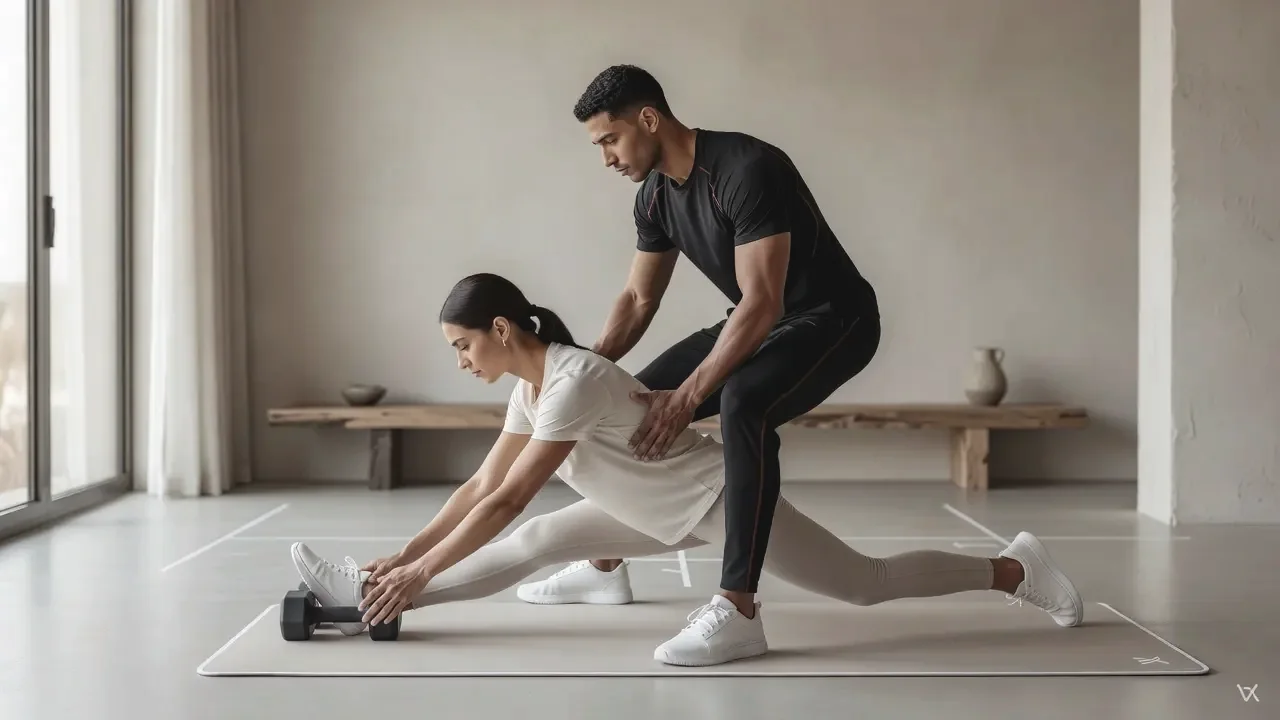
Finding the right trainer can be the difference between spinning your wheels at the gym and actually achieving the results you have been working toward. Dubai's fitness industry has exploded in recent years, giving you access to some of the world's top coaching talent, but that abundance of choice also makes the selection process more complex than ever.
Whether you are looking to build lean muscle, improve athletic performance, or finally crack your weight loss plateau, the personal fitness trainers in Dubai market offers specialists for virtually every goal imaginable. The challenge is knowing how to separate the truly qualified professionals from those who simply look the part.
This guide cuts through the noise and gives you a clear, practical framework for making a confident decision. You will learn what certifications actually matter, how to evaluate a trainer's experience and coaching style, what red flags to watch for, and how to ensure you are getting real value for your investment. By the time you finish reading, you will know exactly what to look for and what questions to ask before signing any contract.
Why Personal Training in Dubai Is Different
Dubai is not London. It is not New York. And the personal training market here reflects that distinction in concrete, structural ways that matter when you are choosing how and where you train.
The climate is the most immediate factor. From May through October, outdoor temperatures regularly exceed 40°C with humidity levels that make sustained exertion genuinely hazardous. That is not a minor inconvenience; it is a five-month window each year where outdoor training shifts from uncomfortable to inadvisable. The result is that indoor, private, and mobile coaching formats are not a lifestyle preference here; they are a practical necessity.
Then there is the time equation. Dubai's professional population is among the most time-compressed in the world. A round trip to a public gym in a city built around car travel, navigating Business Bay or Marina traffic on a weekday morning, can absorb 45 to 60 minutes before a single rep is completed. For executives and working parents, that trade-off simply does not work. A personal trainer at home who arrives at your building removes the commute entirely.
That leads to a third structural advantage unique to Dubai's residential landscape. Buildings across Marina, Downtown, Business Bay, and JVC routinely include private gyms as standard amenities. A qualified mobile coach can program and deliver your entire session within that facility. You own the access; the right trainer turns it into a genuinely high-performance environment.
Privacy is the fourth dimension. A meaningful segment of Dubai's population, including local women and female professionals from across the region, actively prefer private, in-home sessions for cultural or personal reasons. Public gym floors cannot offer that. A mobile coaching model can, and does.
According to global personal fitness trainer market analysis, in-person training commands a 60% share of the global market in 2026, confirming that face-to-face, private coaching remains the dominant consumer preference worldwide. Dubai has simply arrived there faster, driven by climate, urban design, and demographics rather than trend cycles. The result is a local market structured around convenience, privacy, and results-accountability in a way that cities like London or New York have not yet fully reached.
7 Things Worth Checking Before You Hire a Personal Trainer in Dubai
Hiring the wrong trainer costs more than money. It costs weeks of inconsistent sessions, a misaligned program, and the slow erosion of the habit you were trying to build. Before you commit, run every candidate through these seven criteria.
- 1. Certification. Confirm the trainer holds a REPs Dubai-recognized qualification at a minimum. This is the baseline standard the market operates on, not a bonus credential.
- 2. Delivery model. Decide whether gym-based, mobile, or online coaching fits your schedule. A at-home trainer who comes to you removes the commute variable entirely, which matters when time is the constraint.
- 3. Nutrition integration. Nutrition and training are one system. Ask whether your trainer holds a standalone nutrition qualification or simply offers general guidance. The distinction changes outcomes.
- 4. Coach consistency. High-volume operators run active fitness trainer recruitment drives year-round, which signals turnover risk. Confirm you will train with the same coach every session, not a rotating roster.
- 5. Coverage area. Verify the trainer operates in your district without friction, whether that is Marina, Business Bay, or the Palm.
- 6. Privacy. If discretion matters, ask directly. Private, at-home sessions eliminate the public gym floor entirely.
- 7. Onboarding process. A rigorous coach begins with a movement screen, health history review, and goal-setting consultation before any programming starts. If there is no structured intake process, that signals a transactional approach rather than a long-term system.
1. Are They REPs Dubai Licensed?
REPs UAE (Register of Exercise Professionals UAE) is the official public register for fitness professionals operating in the UAE, established under the Dubai Sports Council and active since 2013. It operates within the International Confederation of Registers for Exercise Professionals (ICREPs), aligning UAE fitness standards with those applied in the UK, Australia, the USA, and over a dozen other countries. Registration confirms that a trainer has met nationally agreed occupational standards, holds recognized qualifications, carries verified competency in a real gym environment, and commits to ongoing professional development through annual CPD points. According to REPs UAE's own guidance, members of the public are strongly recommended to check the trainer database before hiring any fitness professional.
The practical consequence of skipping this check is significant. An unlicensed trainer has not been independently assessed against any defined professional standard. If something goes wrong during a session, a client working with an unregistered professional has no recourse to a regulated body. REPs UAE actively runs the campaign #isyourtrainerregistered precisely because unverified trainers continue to market themselves across Dubai. The campaign's existence is itself a signal that the gap is real and ongoing.
The license is a floor, not a ceiling. Beyond confirming current REPs registration, look for layered credentials: certified nutrition coaching, behavior and habit coaching qualifications, and any specialist certifications relevant to your specific goals. Lapsed registration does not count; the standard requires annual renewal. You can verify any trainer's current status directly through the public search tool before committing to a single session.
Abdul Wahid of SHUYO is REPs Dubai licensed and holds certifications in nutrition and wellness coaching. Every session operates within a regulated, accountable framework, with no ambiguity about professional standing.
2. Do They Come to You, or Do You Go to Them?
The delivery model you choose when hiring one of Dubai's personal fitness trainers is not a lifestyle preference. It is a structural decision that will determine, more than almost anything else, whether you actually show up consistently enough to see results.
Convenience is the most commonly cited reason clients abandon fitness routines, not lack of motivation and not program design. When showing up requires navigating Sheikh Zayed Road after a ten-hour workday, locating parking, changing in a crowded facility, and then reversing the entire sequence, the friction accumulates until one missed session becomes two, and two becomes the end of the program. A at-home trainer who arrives at your home, your building gym, or a nearby outdoor space like JBR beach or a community park collapses that entire chain of obstacles into a single action: opening your front door.
The time arithmetic is significant for busy professionals. A conservative 30-minute round-trip commute saved across three sessions per week returns roughly 90 minutes of productive or recovery time weekly. Across a twelve-week program, that is eighteen hours reclaimed. As one analysis of the Dubai at-home training model notes, professionals who switched to home-based training achieved months of consistency that a traditional gym structure had previously made impossible.
The trainer-comes-to-you model is not a premium convenience feature. It is a consistency engine, and consistency is the only variable that actually produces long-term results. SHUYO is built entirely around this principle: your coach comes to you, across Dubai's key residential communities, so the only decision you need to make is to show up to your own home.
3. Is Nutrition Part of the Program?
The 2026 industry consensus is unambiguous: trainers who extend their scope beyond exercise programming to cover nutrition, sleep, and lifestyle management outperform pure exercise coaches on both client retention and measurable results. This is not a niche opinion. It reflects a structural reality that the most commercially successful coaching businesses have already built into their models.
Training and nutrition are not separable for any client with a meaningful body composition or performance goal. A calorie surplus does not disappear because the session was hard. Protein timing affects recovery. Sleep quality determines whether adaptation from training actually occurs. A coach who addresses only one half of that equation is, by definition, delivering an incomplete service, regardless of how well-designed the programming is.
The right question to ask any trainer you are considering is not whether nutrition is available, but whether it is included structurally. A structured approach means macros, meal timing, and dietary strategy are woven into every program from day one, not offered as a separate product at an additional cost once you are already committed.
SHUYO Fuel takes this integration further than most. Coach-reviewed meal plans are built to your individual numbers, prepared fresh, and delivered directly to your door. The nutrition component requires zero additional planning or effort from the client. That is a meaningful distinction.
This is precisely what separates a health management system from a workout service. Sessions alone produce temporary change. A system that manages training, nutrition, and accountability simultaneously produces the kind of consistency that does not depend on willpower.
4. Are You Training With the Coach You Hired?
In large gym operations and multi-trainer PT companies, the person who sells you a program and the person who actually shows up to deliver your sessions are frequently not the same individual. This is not an occasional oversight; it is a structural feature of volume-based fitness businesses, where floor coverage and sales targets drive scheduling decisions. Gulf-region PT job specifications explicitly require trainers to both sell and deliver, creating a commercial pressure to assign whoever is available rather than whoever knows your history.
The cost of that inconsistency is real. A 2024 peer-reviewed study indexed by the US National Library of Medicine confirmed that personal trainer guidance is a distinct, measurable variable in fitness outcomes, not a background condition. Every coach switch resets the accumulated knowledge that your trainer has built: how you compensate under fatigue, which cues land, how quickly you recover between sessions, where your movement patterns need reinforcement. Effective accountability in personal training is described by industry practitioners as systematic and methodical, woven into the coaching relationship over time. That system cannot survive repeated personnel changes without significant information loss.
The founder-led model eliminates this problem entirely by design. When you train with a coach whose name and reputation are inseparable from the brand, there is no delivery gap between the person who assessed you and the person programming your sessions. Accountability also runs in both directions: a coach with a reputational stake in every session, not just the initial sale, is structurally motivated to produce consistent results across the full program duration.
Before signing with any of Dubai's personal fitness trainers, ask one direct question: who will deliver my sessions, and will that person remain consistent for the duration of my program? The answer will tell you everything about the model you are actually buying.
5. Do They Train Across Your Neighborhood?
Dubai's residential geography is not forgiving. The drive from Arabian Ranches to Dubai Marina during peak hours can exceed 45 minutes in a single direction, and that travel burden falls somewhere. Mobile trainers who base themselves in one part of the city often operate within a practical radius that excludes inland villa communities altogether. Before signing up with any trainer, ask directly which specific neighborhoods they cover, whether a travel surcharge applies beyond a certain zone, and whether sessions can shift online if your location changes temporarily.
This matters even more if your daily life spans multiple parts of the city. Many Dubai residents live in one district and work or train in another. A client living in Dubai Hills who regularly visits a second property on the Palm needs a trainer whose coverage is genuinely city-wide, not zone-specific. Geographic flexibility is a practical requirement for this lifestyle, not an upgrade.
Local search results will routinely surface providers claiming full Dubai coverage. Verify before you commit. Luxury at-home personal training is an actively growing segment, with new entrants arriving as recently as September 2025, which means marketing claims are outpacing confirmed service maps in some cases.
SHUYO covers Marina, JBR, Downtown Dubai, Business Bay, Palm Jumeirah, JVC, Dubai Hills, Arabian Ranches, Jumeirah, and Emirates Hills, extending further to Sharjah, Abu Dhabi, and online. That cross-city, cross-emirate reach means a residential move, a work relocation, or a period of travel does not break the program. The coach travels with you, in practice or virtually, so continuity is built into the model from the start.
6. Is There a Privacy Option for Female Clients?
For a significant portion of women in Dubai, both Emirati nationals and expatriates, private home training is not a preference. It is a requirement. The drivers are structural: cultural background, religious observance, personal comfort, and the practical reality that many women will not train consistently if training means entering a mixed public gym environment. Demand for this model has grown significantly in recent years, and female personal training options in Dubai now represent a distinct and mature segment of the market, not a niche addition to it.
The limitation of a gym-floor arrangement is environmental, not instructional. A qualified trainer working in a public gym cannot change the fact that the setting is public. The audience, the exposure, and the ambient pressure of a shared space remain constant regardless of how the session is structured or how skilled the coach is. No amount of session design resolves that.
In-home, private mobile training is the only model that eliminates this barrier completely. The session takes place at your address, with no audience, no commute through Dubai traffic, and no fixed studio timetable to accommodate. Scheduling wraps around your day, whether that is early morning before a professional commitment, midday, or an evening slot after family time. When evaluating personal trainer options in Dubai, confirm two things directly: that sessions can be delivered entirely at your home address, and that the coach's availability is flexible enough to match your routine rather than a preset gym schedule. Comfort drives consistency, and consistency is where results are actually built.
7. What Does the Onboarding Process Look Like?
The onboarding process is one of the most reliable diagnostics available when evaluating personal fitness trainers in Dubai. A trainer who invests in a thorough intake before writing a single exercise is signalling something concrete: that they intend to build a program around you, not around a template. According to the National Federation of Professional Trainers, trainers who implement structured onboarding achieve 28% higher client retention and 35% higher client satisfaction scores. Despite this, a 2024 International Coaching Federation survey found that only 38% of personal trainers have a formal intake system in place. The majority are improvising.
A professional first session should work through a defined sequence before any programming decisions are made. NASM's guidance on fitness consultations is clear: the initial meeting is an information-gathering exercise, not a workout. It should cover health history, movement screening, lifestyle factors including sleep quality and stress load, exercise history, and specific goal clarification. Trainers who skip this and begin programming on day one are not making informed decisions; they are guessing. And in Dubai's high-turnover expat population, where clients arrive with wildly varied fitness backgrounds, injury histories, and time horizons, generic programming fails faster and more visibly than almost anywhere else.
SHUYO addresses this directly. Every client relationship begins with a free 60-minute trial assessment called the SHUYO Score, a full baseline covering movement, body composition, lifestyle, and goals, completed before any financial commitment is requested. This is structurally unusual. Most trainers ask for payment first and gather information later, if at all. SHUYO inverts that sequence deliberately, because clients who begin with a thorough assessment are better positioned for long-term consistency. The data from the assessment shapes every session that follows, which is precisely why it is offered at zero risk.
What the 2026 Coaching Research Actually Says
The numbers behind personal training in 2026 are worth understanding before you sign anything. The global personal fitness trainer market was valued at USD 45.6 billion in 2025 and is projected to reach USD 48.0 billion by end of 2026, growing at a 5.3% CAGR toward USD 80.5 billion by 2036. That trajectory confirms one thing clearly: demand for qualified coaching is structurally growing, not a post-pandemic blip. For Dubai, a city that already indexes high on wellness spending and discretionary income, that macro tailwind is amplified. The competitive density that comes with a growing market, however, is equally real.
Despite the proliferation of app-based alternatives and AI-driven fitness platforms, in-person training holds 60% of the global market share in 2026, and one-on-one private sessions account for nearly 39.8% of total revenues. Consumers have access to more digital fitness options than at any previous point, yet the majority continue to choose a coach who shows up in person. For Dubai's professional audience, this is consistent with observed behavior: privacy, personalization, and accountability are not things a subscription app reliably delivers.
The market's growth has produced a concrete operational problem for trainers. Four in five personal trainers globally report that acquiring new clients has become harder or has plateaued compared to prior years. Simply having an online presence is no longer sufficient. Differentiation on coaching philosophy, verified credentials, and delivery model has become the primary competitive lever. This is precisely why signals like REPs Dubai licensing, a defined methodology, and a specific client model carry weight in a crowded market.
The six dominant 2026 industry trends identified across current research are: hybrid coaching, wearable and biometric data integration, recovery and nervous system coaching, on-demand content, holistic health positioning, and behavior and habit systems. Each one reflects a shift away from the traditional "show up, lift, leave" model toward coaching as a whole-system health practice. Trainers who integrate these dimensions are demonstrably outperforming those who deliver exercise programming alone.
Finally, industry analysts have formally reclassified personal training from discretionary luxury to staple spending among high-income professionals. For Dubai's executive and professional audience, this framing already matches lived behavior. Health investment is not a reward for a good quarter. It is a fixed operational cost of performing at the level the city demands.
How SHUYO Approaches Personal Training in Dubai
Every element of the SHUYO model connects back to a single idea borrowed from Japanese martial philosophy: Shugyo, meaning disciplined self-mastery through daily practice. The practical implication is not abstract. Where most fitness programs in Dubai rely on client motivation to sustain consistency, the SHUYO framework is designed as a system that manages consistency on the client's behalf. Willpower is finite and context-dependent; structure is not. This philosophical foundation is what separates SHUYO from providers that lead with transformation timelines and then leave clients to find their own discipline between sessions.
One Coach, One Standard
Founder Abdul Wahid is REPs Dubai licensed and holds certifications in both nutrition and wellness coaching. Every client trains directly with him. There are no intermediary coaches, no handoffs, and no variation in the standard of delivery from one session to the next. In a market where multi-trainer agencies are common and client reassignment is a documented frustration, the single-coach guarantee is a structural commitment rather than a marketing claim. The person who assesses you at the start is the same person coaching your third month of sessions.
Three Plans, Three Sessions, One Framework
SHUYO offers three structured plans: The Practice, The Method, and The Mastery. All three run at three sessions per week. That frequency is intentional. Three sessions per week is enough to build genuine habit architecture and produce measurable physical adaptation, but it does not require a client to restructure a demanding professional schedule around training. For busy executives and working parents across Dubai's residential communities, from JBR to Dubai Hills to Arabian Ranches, this is a threshold that is sustainable rather than aspirational.
Nutrition and Fuel Delivered
SHUYO Fuel closes the gap that most personal training programs leave open. Coach-reviewed meal plans are prepared fresh and delivered directly to the client's door, removing the requirement for clients to self-manage the dietary side of their program. Nutrition self-management is one of the most documented failure points in fitness adherence; SHUYO treats it as a logistics problem and solves it structurally.
Corporate, Community, and Between-Session Tools
SHUYO Corporate extends the model to companies through onsite sessions, executive coaching, and wellness workshops. For the accountability layer between individual sessions, The Circle community and free tools including the SHUYO Score assessment and the Know Your Numbers calculators provide data literacy and structured touchpoints. Hybrid coaching, combining in-person sessions with digital accountability, is now the baseline client expectation in 2026, not a premium addition. SHUYO's infrastructure addresses this directly. Every journey begins with a free 60-minute trial assessment; contact the team at hello@shuyo.ae or via WhatsApp on +971 56 548 8814.
Where SHUYO Trains in Dubai
SHUYO's mobile coverage spans the full arc of Dubai's residential geography, from the waterfront communities along the coast to the family-oriented inland neighborhoods that make up the city's quieter residential core.
Active service areas include Dubai Marina, JBR, Downtown Dubai, Business Bay, and Palm Jumeirah along the urban-coastal corridor, alongside Jumeirah, JVC, Dubai Hills, Arabian Ranches, and Emirates Hills further inland. Whether you are in a high-rise apartment overlooking the Marina or a villa in Arabian Ranches, the session comes to you: at your home, in your building gym, or at an outdoor location of your choice.
Coverage extends beyond Dubai to Sharjah and Abu Dhabi, and the online coaching program removes geography as a barrier entirely for clients who travel frequently or are based outside those zones. The structure stays consistent regardless of where you are.
The core principle throughout is straightforward. Your time and your schedule determine the venue, not the other way around. No commute, no parking, no waiting for equipment. One coach, one standard, wherever you are in the UAE.
Start With a Free 60-Minute Assessment
Every SHUYO journey begins with the SHUYO Score: a free, 60-minute trial assessment that maps your personal baseline across four pillars: fitness, movement, nutrition, and lifestyle. No program is written before this step is complete. The reasoning is straightforward: a training plan built on real, individual data performs differently from one built on assumptions, and that difference compounds over months of consistent work.
There is no financial commitment at the assessment stage. It exists entirely to ensure that whatever follows is calibrated to you specifically, not to a generic client profile. This removes the primary barrier most people face when starting: the risk of committing budget to a program that does not reflect where they actually are.
Booking is deliberately simple. Reach out via WhatsApp at +971 56 548 8814, email hello@shuyo.ae, or follow and message on Instagram at @weareshuyo. All three channels connect you directly to the same coach who will run the session and build the program.
Regardless of which personal fitness trainer in Dubai you ultimately choose, a thorough baseline assessment is the correct first step. It is the standard every serious program should meet. The 60-minute session is the lowest-friction way to find out whether SHUYO is the right fit, with no cost and no obligation attached.
Make the Right Call Before You Commit
Seven criteria. Every one of them verifiable before you spend a dirham.
REPs Dubai license. Mobile delivery model. Integrated nutrition. Consistent coach. Neighborhood coverage. Privacy options. Structured onboarding. Run every trainer you are considering against this list and the shortlist becomes short quickly. In a market growing at 8.5% annually, the volume of trainers is rising faster than the average quality. Marketing language is abundant and cheap. These seven signals are neither.
The coaches gaining the strongest client retention in 2026 are not simply delivering better workouts. They are combining movement, nutrition, behavior systems, and data literacy into one coherent service. Standalone exercise programming is no longer competitive at the premium end of this market.
If you have read this far, you are ready to verify rather than assume. The SHUYO free 60-minute assessment is the logical next step: no financial commitment, no program pitch, just a precise baseline across fitness, nutrition, movement, and lifestyle. Start there at shuyo.ae.
Conclusion
Choosing the right personal trainer in Dubai does not have to feel overwhelming. Keep these key takeaways in mind: prioritize verified certifications and proven experience over flashy social media profiles, ask direct questions about coaching style and track record before committing, and watch closely for red flags like vague programming or pressure tactics.
Dubai's fitness scene gives you access to genuinely world-class coaching talent. Your job is simply to approach the selection process with the same discipline you plan to bring to your workouts.
Start by shortlisting two or three trainers who align with your specific goals, schedule consultation sessions, and trust your instincts alongside the facts. The right trainer will challenge you, support you, and deliver real results. Take that first step today, because the only workout you will ever regret is the one you keep putting off.