Finding a Personal Trainer in Dubai: What to Actually Look For
Dubai holds roughly 2.5% of the world’s personal trainers. Volume is not the problem — knowing what to screen for is.
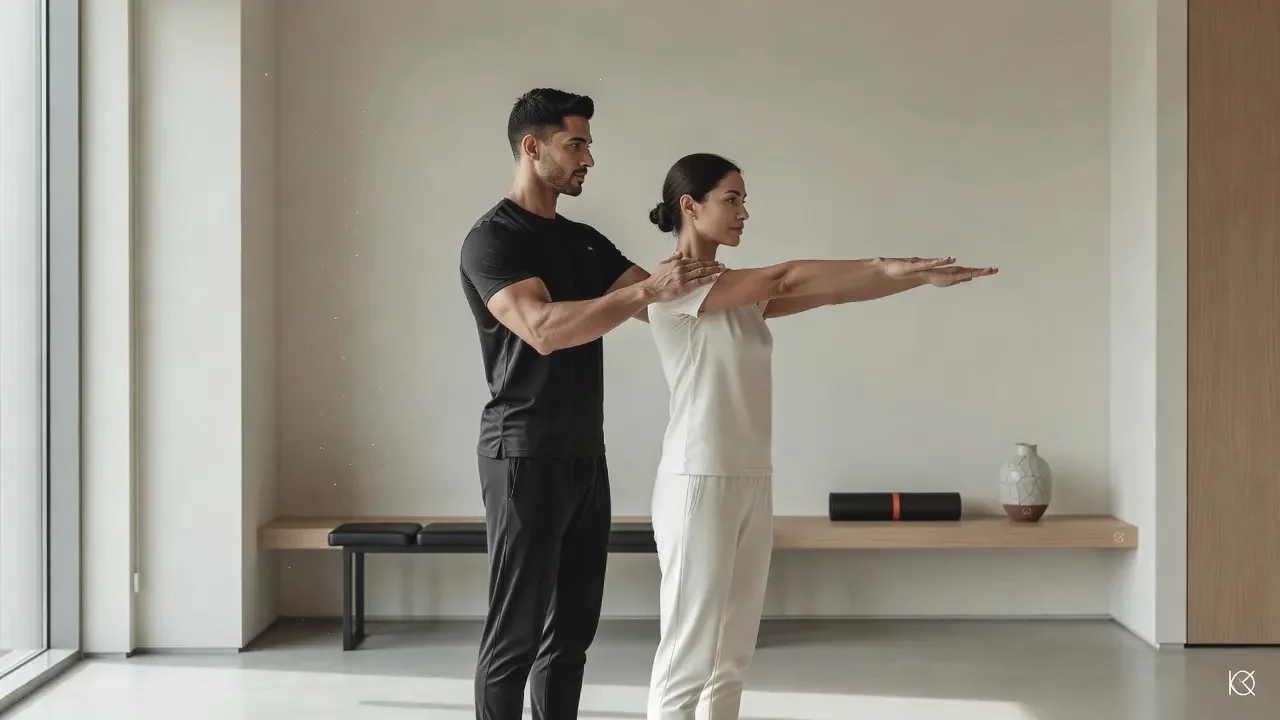
Searching for a "personal trainer near me" in Dubai might seem straightforward until you realize just how many options are competing for your attention. The city is packed with fitness professionals ranging from highly qualified coaches with decades of experience to weekend certification holders who barely know the difference between a deadlift and a Romanian deadlift.
The difference between a transformative fitness journey and a frustrating waste of money often comes down to one decision: choosing the right trainer. Yet most people make this choice based on little more than proximity, price, or an impressive Instagram feed.
This guide cuts through the noise. Whether you are comparing independent trainers, gym-based coaches, or online hybrid options available across Dubai, you will walk away knowing exactly what qualifications to verify, which red flags to avoid, and what questions to ask before signing any contract. We will also break down the key differences between trainer types so you can match the right professional to your specific goals, budget, and schedule. No guesswork, just a clear framework for making a smarter choice.
The Dubai PT Market Is Not Short of Options — It Is Short of the Right Ones
Dubai is estimated to be home to approximately 2.5% of the world's personal trainers despite accounting for just 0.04% of the global population. That disproportionate density makes it one of the most trainer-saturated cities on earth, and paradoxically, one of the hardest markets in which to make a well-informed hiring decision. More supply does not automatically mean better options. It means more noise.
The scale of the industry behind that noise is significant. The global personal fitness trainer market was valued at USD 45.6 billion in 2025 and is forecast to reach USD 80.5 billion by 2036, growing at a 5.3% compound annual rate. That trajectory is drawing new providers into already-competitive urban markets every year, and Dubai sits near the top of that list.
The problem is not volume. The problem is that volume without differentiation produces confusion. When dozens of trainers compete for the same search query, marketing defaults to the lowest common denominator: before-and-after photos, motivational captions, and vague promises of transformation. None of that tells you whether a coach is qualified, whether their system will hold when your schedule becomes demanding, or whether their approach extends beyond the session itself.
Buyers, to their credit, have raised their own standards. The 2024 REPs UAE Working in Fitness Survey found that 74.3% of UAE fitness professionals report clients have shifted toward greater health consciousness since COVID, with 86% noting that overall wellness has become a higher consumer priority. The market is more discerning than it has ever been.
That is precisely why the right question when searching for a personal trainer near me is not who is geographically closest. It is which format, which coach, and which system will produce results you can sustain across months and years. This guide addresses each of those variables in sequence.
The Format Decision: Studio, Gym Floor, or Mobile — and Who Each Actually Serves
Three formats define the Dubai personal training market, and the differences between them are not cosmetic. They are structural, and they map directly onto why most people eventually stop training.
Studio-based training offers a genuinely controlled environment: dedicated equipment, climate management, and a premium atmosphere designed to signal seriousness. The trade-off is a non-negotiable one. The client travels to the facility, every session, regardless of traffic on Sheikh Zayed Road, a late meeting, or a school pickup that ran over. For ambitious professionals whose schedules shift daily, the commute does not stay a minor inconvenience. It becomes the excuse. Research on the current state of personal training published in the Journal of Strength and Conditioning Research identifies poor adherence as one of the most consequential outcomes of friction in the training experience. Studio models, however premium the reception area, build friction into every session by design.
Commercial gym floor training removes the studio premium and reduces the cost, but introduces a different set of problems. Shared equipment, unpredictable noise levels, and the persistent awareness of being observed create an environment that is quietly hostile to focused work. For women who prefer discreet sessions, and for executives who have no desire to be seen mid-set by a client or a colleague, the gym floor is not a neutral space. It is an active deterrent.
Mobile and at-home training resolves both issues at once. The coach arrives at your home, your building gym, or an outdoor location, at a time built around your schedule rather than a facility's timetable. In-person training still holds 60% of global market share in 2026, confirming that face-to-face coaching remains the most effective delivery model available. The mobile format captures that effectiveness while eliminating the friction points that cause drop-off.
For Dubai's core demographic of time-pressured professionals and busy families, this is not a marginal advantage. No commute, no parking, no waiting for a squat rack, no childcare conflict because the session happens while the toddler naps. The session fits around life. The right format choice comes down to one honest question: what caused you to stop the last time?
One Coach vs. a Roster: Why the Name on the Review Always Matters
A significant portion of Dubai's personal training market operates on a roster model. Agencies deploy pools of coaches and allocate them to clients based on who is available, who is geographically closest, or whose schedule happens to align. The match is logistical, not relational. That structural reality shapes everything about the experience that follows, and it carries a risk that most clients only discover after they have already committed.
The clearest evidence of this dynamic appears in the reviews themselves. Read through the feedback for any roster-based operator and a pattern emerges immediately: clients praise a specific trainer by name, not the brand. "Ask for [name], he completely changed my approach" is not a compliment to the agency. It is a signal that the actual product being purchased is the individual, and that what the client is at risk of losing is access to that person if schedules shift, the trainer moves on, or the agency reassigns them. The brand absorbs the marketing; the trainer absorbs the accountability.
There is a meaningful reason why this matters beyond inconvenience. A coach who trains you consistently across months accumulates what might be called compound knowledge: the movement compensation in your left hip, the weeks when work stress reliably derails your sleep, the nutritional patterns that quietly undermine progress, the specific verbal cue that finally unlocks your squat. As the distinction between trainer and coach makes clear, depth and continuity are precisely what separate a transactional session from a genuine coaching relationship. That accumulated context cannot be summarized in a handover note and cannot be rebuilt quickly with a new face.
Consistency is also the mechanism through which real accountability is built. A coach who has worked with you for six months has earned the standing to push back, to call out a pattern of avoidance, to recalibrate expectations when you are coasting. A rotating trainer cannot do that, not because they lack skill, but because the relational standing simply has not been established. That social contract is a material driver of long-term adherence, and losing it mid-program is a structural setback, not a minor inconvenience.
When evaluating any provider, one question cuts through the marketing: will I train with the same coach for every session? If the answer is "usually" or "we will match you with the best available," treat that as a genuine trade-off. It is not an operational footnote.
Training-Only vs. Training Plus Nutrition Under the Same Coach
The number-one fitness goal reported by UAE clients is weight loss, followed by better health and disease prevention. Both outcomes are driven primarily by nutrition, yet the standard model across Dubai's personal training market treats nutrition as an optional add-on, quoted separately and delivered by a different provider entirely. Research cited by Dubai fitness platforms highlights the arithmetic problem this creates: exercise-only interventions produce an average weight loss of just 2.9 kg over 12 months, while combined diet and exercise produce 11.4 kg. A single casual meal at a Dubai restaurant can easily exceed 1,200 calories; a 60-minute HIIT session burns roughly 400 to 600. Training without nutritional structure is, for most clients, a significant investment in a partial solution.
The split-provider model creates a problem that is rarely discussed openly. When a personal trainer and a separate nutritionist or meal service are managing different parts of your program, you become the integration layer. You carry the cognitive burden of reconciling potentially conflicting macros and training loads, managing two separate relationships, and identifying gaps that neither provider can see because neither has the full picture. The demand signal in Dubai is clear: posts in expat fitness communities explicitly seeking a complete fitness and nutrition program under one coach routinely attract dozens of responses, reflecting an active and largely unmet need.
A coach who holds both your training and nutrition prescription removes that fragmentation entirely. Training load is calibrated against dietary input. Recovery protocols align with meal timing. An adjustment to one variable is reflected immediately in the other, because the same professional is monitoring both.
SHUYO Fuel takes this further still. Coach-reviewed meal plans built to your individual numbers are prepared fresh and delivered to your door in Dubai, meaning the nutrition component is not simply advised but operationally solved. There is no separate app to manage, no second relationship to maintain, and no generic food list handed over at the end of a session.
Before hiring any personal trainer in Dubai, ask three specific questions: Is nutrition guidance included in the program fee or quoted separately? Is the nutrition advice personalized to your actual body composition data? And is any meal support genuinely integrated into your training plan, or is it a standalone document with no connection to what you are being asked to do in your sessions? The answers will tell you whether you are hiring a coach or simply half of one.
What REPs UAE Licensing Means — and Why It Should Be Non-Negotiable
REPs UAE, the Register of Exercise Professionals UAE, is the formal regulatory body responsible for setting and enforcing qualification standards for fitness professionals across Dubai and the wider UAE. Registration is not optional. It is compulsory for any trainer practising professionally in the emirate, and operating without it is against the law. The REPs UAE occupational standards define the specific competency areas a trainer must demonstrate before they are permitted to work with clients, covering exercise science, client assessment, program design, nutrition and weight management within an exercise context, behavior change, and ongoing program evaluation. These standards are built on the ICREPs Global Standards, which means a REPs UAE-registered trainer meets a internationally recognized benchmark, not merely a local one.
What this means in practice is straightforward. A licensed trainer has been verified against each of those competency areas. An unlicensed trainer has not, regardless of how many years they claim, how polished their social media presence is, or how impressive a foreign certification sounds. A qualification earned abroad does not automatically confer UAE practice rights; REPs UAE registration is a separate, additional step. Any trainer offering nutrition guidance alongside training should also hold a distinct nutrition and wellness coaching certification, because general PT registration and specialist nutrition credentialing are not the same qualification.
The problem is that many clients searching for a personal trainer near me in Dubai have no clear way of knowing which category the trainer they are considering falls into. REPs UAE themselves have run awareness campaigns under the hashtag #isyourtrainerregistered, a signal that client-side verification is not yet a default habit.
The verification step takes two minutes. Ask any trainer you are considering for their REPs UAE registration number and confirm it through the public trainer search at repsuae.com. If they cannot provide one, that is your answer.
Abdul Wahid at SHUYO holds REPs Dubai licensing and is a certified nutrition and wellness coach. Those credentials should be the baseline expectation when hiring any personal trainer in Dubai, not a point of differentiation. The fact that they still function as one says something important about the market you are navigating.
The Willpower Problem: Why Most Fitness Attempts Fail and What a System Actually Solves
Most fitness programs do not fail because the training was poorly designed. They fail because consistency was never structurally solved. The typical model assumes motivation will stay high, schedules will remain clear, and the client will make the right decision every single day under real-world pressure: a late meeting, a difficult commute, a week of disrupted sleep. Research confirms that motivation is not a stable trait but a dynamic psychological state influenced by context, environment, and internal perception. Willpower, when used as the primary mechanism of adherence, is a finite and depleting resource. Once it runs out, even a well-programmed training plan goes unused.
The data from the 2024 REPs UAE Working in Fitness Survey makes the industry's awareness of this problem explicit: 86% of UAE fitness professionals reported that maintaining overall wellness is a higher consumer priority since COVID, and the dominant professional response has shifted accordingly. Coaches who understand why willpower fails as a long-term adherence strategy have moved toward holistic models that address behavior, mindset, and environment alongside physical training. The transformation-promise model, centered on a before-and-after timeline, has been quietly replaced by systems designed to outlast motivation cycles.
SHUYO's approach is built around the Japanese concept of Shugyo: disciplined self-mastery through daily practice. That philosophy reframes fitness not as a project with a finish line but as a compounding system of daily habits. The goal is not to manufacture motivation but to make motivation irrelevant. Behavioral science supports this directly: when self-control resources are low, people default to established habits triggered by environmental cues. The structural implication is significant. Build the right environment, and consistency follows without depending on internal resolve.
In practical terms, the SHUYO program is designed to work specifically on the days when motivation is absent. Sessions are mobile and come to you, eliminating the commute barrier that is one of the most common and legitimate reasons busy professionals skip training. Nutrition is operationally solved through SHUYO Fuel, coach-reviewed meal plans prepared fresh and delivered to your door, removing daily dietary decisions from the equation entirely. The Circle community provides external accountability when internal drive dips, because accountability to another person is more durable than accountability to a goal.
The most useful question to ask any trainer you are considering is not "what results will I get?" It is: "how does your system ensure I actually show up and stay consistent for twelve months?" The answer to that question is the clearest separator between coaches who sell transformation promises and coaches who have built the structure to deliver them.
How SHUYO Works in Practice: The Model, the Areas, and Where to Start
SHUYO is a at-home personal training and human performance brand founded and operated by Abdul Wahid, a REPs Dubai-licensed personal trainer and certified nutrition and wellness coach. Every client trains directly with him. The roster size does not change that. There is no allocation system, no substitute coach, no variation in standard depending on the day or the schedule. The person who designs your program, tracks your numbers, and adjusts your nutrition is the same person standing in front of you at every session.
Coverage Across the UAE
Sessions come to you, at your home, your building gym, or outdoors, across a full range of Dubai locations including Marina, JBR, Downtown, Business Bay, Palm Jumeirah, JVC, Dubai Hills, Arabian Ranches, Jumeirah, and Emirates Hills. Coverage extends further to Sharjah and Abu Dhabi, and online coaching through SHUYO Remote is available for those who travel or prefer a virtual format. In practical terms, "personal trainer near me" is not a geography problem for anyone based in the UAE.
Three Plans, One Integrated System
Three training plans structure the commitment: The Practice (monthly), The Method (quarterly), and The Mastery (six months). All three include three sessions per week. Each plan can be paired with SHUYO Fuel, a coach-reviewed meal plan built to your specific numbers, prepared fresh, and delivered to your door in Dubai. That combination puts training and nutrition under a single coach, removing the coordination gap that typically sits between the two.
Corporate and the Starting Point
For organizations, SHUYO Corporate delivers onsite sessions, executive coaching, and wellness workshops built around genuine performance outcomes, not generic group classes. It is a purposefully distinct offering for teams and companies that want measurable results, not a tick-box wellness program.
Every journey, whether individual or corporate, begins with a free 60-minute trial assessment called the SHUYO Score. It maps your current baseline across mobility, strength, endurance, and body composition, identifies the specific gaps, and outlines what a structured program would look like for your situation. No commitment is required to proceed. It is simply the clearest possible starting point.
What to Do Next: Your Checklist Before Hiring a Personal Trainer in Dubai
Before you sign anything or hand over a payment, run through this checklist. Each question is a filter, and together they separate a program that will hold over time from one that will not.
Confirm the format removes friction, not just the gym. Mobile training eliminates the commute barrier that causes most people to drop out within the first month. If the format requires you to travel, plan ahead, or arrive somewhere on time after a full working day, the format is working against you before the session starts.
Verify REPs UAE registration directly. Visit repsuae.com and ask the trainer for their membership number. If nutrition guidance is part of the offer, confirm the nutrition credential separately; it is not automatically included in a personal training qualification.
Ask whether you train with the same coach every session. Consistency of relationship is a performance variable, not a preference. A rotating roster makes progressive coaching structurally impossible.
Establish whether nutrition is built in or billed separately. Integrated training and nutrition under one coach produces better outcomes than two services from two providers that never speak to each other.
Ask how the program handles low-motivation days. A specific, structural answer signals a coaching methodology. A vague motivational response signals a session-seller.
When you are ready to get your baseline numbers and a clear program recommendation without any financial commitment, start with SHUYO's free 60-minute trial assessment. Reach Abdul Wahid directly at hello@shuyo.ae or +971 56 548 8814 by phone or WhatsApp.
Conclusion
Finding the right personal trainer in Dubai does not have to feel overwhelming. Keep these essentials in mind: verify credentials from recognized certifying bodies, prioritize trainers who assess your goals before pitching packages, and watch for red flags like vague pricing or pressure tactics. Remember that proximity and price are the least reliable filters when choosing someone who will directly impact your health.
The difference between a trainer who delivers results and one who wastes your time often comes down to the questions you ask upfront. You now have the knowledge to ask the right ones.
Start your search today with a clear checklist, request a consultation before committing, and trust the process of evaluating properly. Your fitness journey deserves a foundation built on expertise and trust, not convenience alone. The right trainer is out there; you just need to know what to look for.